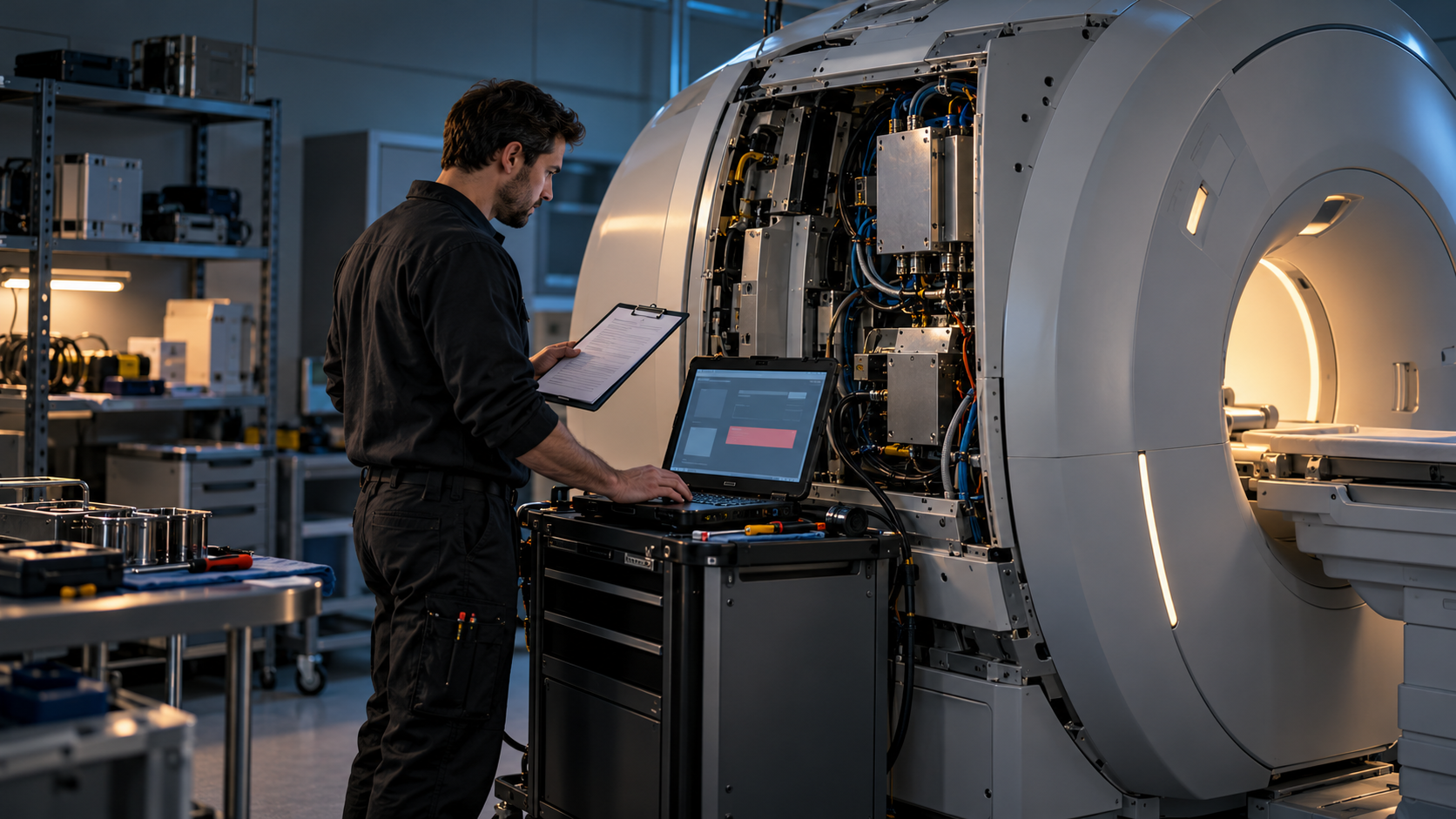
The Copyright Office published the opening notice for its tenth triennial review of exemptions that allow circumvention of digital access controls under section 1201 of the Digital Millennium Copyright Act. Most existing exemptions are headed toward streamlined renewal. Medical-device repair is the exception. It is the only current exemption the Office moved into a full evidentiary proceeding, with three comment rounds and a later public hearing before a final rule.
The current exemption remains in force. Repair technicians and healthcare institutions that rely on it today do not face an immediate change. The October 28 notice changes the administrative path the exemption must travel for the next three-year period.
What changed
Federal Register document 2026-21939 opens the rulemaking cycle for exemptions that would run from October 2027 through October 2030. The Register of Copyrights intends to recommend renewal of every existing exemption except medical-device repair through the streamlined process.
The current medical-device class covers computer programs contained in and controlling a lawfully acquired medical device or system, along with related data files, when circumvention is necessary for diagnosis, maintenance or repair. Seven of eight renewal petitions described continuing need, including access to diagnostic software, error logs, service keys and configuration files. Those descriptions are petitioner claims summarized by the Office. They are not agency findings about every device.
Four opposition comments presented a different account and supplied new factual material. The opponents argued that clinical-operation software, servicing and diagnostic software, and maintenance documentation may be distinct copyrighted works. They also said those materials can be protected by different access controls, licensed separately or hosted away from the device. The Office found the new evidence and arguments meaningful enough to require a full record before making a recommendation.
The issue will now proceed within Proposed Class 8, Computer Programs: Repair. Renewal and expansion requests for medical-device repair will be considered together. Initial comments supporting an exemption, or providing neutral information, are due December 7, 2026. Opposition comments are due February 22, 2027. Replies are due March 22, 2027. Public hearings will follow, along with the Register's recommendation and the Librarian of Congress's final rule.
Why it matters
Section 1201 generally prohibits bypassing technological measures that control access to copyrighted works. The triennial process can create narrow, temporary exemptions when the prohibition interferes with noninfringing uses. Each exemption is defined around a class of works and must be renewed for another three-year period.
For medical-equipment diagnosis, maintenance and repair, the practical question is whether the software a technician needs falls inside the class language. The current wording refers to programs that are “contained in and control the functioning of” a lawfully acquired device or system. If the required service tool sits on a manufacturer-controlled server, or is treated as a separately licensed work, the existing text may not fit it cleanly.
A September 1 D.C. Circuit decision did not invalidate the exemption. In Medical Imaging & Technology Alliance v. Library of Congress, the court affirmed the district court's determination that the Librarian's adoption of the prior exemption was lawful, reasonable and supported by the earlier agency record. The court also noted that the earlier record did not substantiate the opponents' proposed distinction between clinical-operation software and a separate body of repair software. The Copyright Office now says the current opposition has placed new evidence about that distinction into this rulemaking record.
This makes software classification and location the hinge. A hospital may own the machine and authorize a qualified service provider, yet the path to error logs, calibration tools or diagnostic functions can still depend on how the copyrighted software is categorized and where it runs. The next record will determine whether the current wording remains adequate and whether proposed expansions fit within the Office's authority.
Verification bottleneck
The proceeding needs evidence that connects legal categories to real service workflows. Commenters will have to show which programs control clinical operation, which support diagnosis or repair, whether the same program can do both, where each program is hosted, what access control blocks it, and how it is licensed.
The Office has not adopted either side's factual account. Its present finding is narrower: the opposition supplied enough new material to defeat streamlined renewal. That decision creates a record-building test rather than a final answer about the exemption's scope.
The evidence will also need to separate device downtime from broader claims about patient care. Repair petitioners described delays, costs and restricted service options. Those accounts can document the operational consequences of access controls, but they do not by themselves establish that every restriction causes patient harm or that every proposed circumvention is lawful.
Watch next
The December 7 comment round is the first milestone. The useful submissions will move beyond general support and document specific software, access controls, hosting arrangements, licensing terms, repair tasks and alternatives. The February opposition round and March replies will test those examples before the public hearings.
Expansion requests are also part of Proposed Class 8. Some petitioners seek language that reaches installation, calibration, cybersecurity-related reconfiguration, regulatory compliance, return to service, or software beyond the device itself. The final rule could preserve the current scope, revise it, expand it or decline to renew it. None of those outcomes has been decided.
The concrete question for October 2027 is whether qualified repairers will retain a lawful route around covered access controls when diagnosis, maintenance or repair requires software access. The answer will be written from the record now being assembled.
Sources
- U.S. Copyright Office, Federal Register document 2026-21939, published October 28, 2026.
- Copyright Office 2027 triennial rulemaking page.
- D.C. Circuit, Medical Imaging & Technology Alliance v. Library of Congress, No. 25-5328, decided September 1, 2026.