Daily Hypernovelty Lead · October 27, 2026
The Takeoff Rule Was Written for a Pilot’s Hands
On October 27, the Federal Aviation Administration published a proposal that reveals a quiet problem inside old safety rules. The takeoff standards for the Embraer ERJ 190-400 assume that a pilot initiates rotation. Embraer’s Enhanced Takeoff System, known as E2TS, would perform that action automatically. The aircraft has changed, while the rule still describes the hands that used to move it.
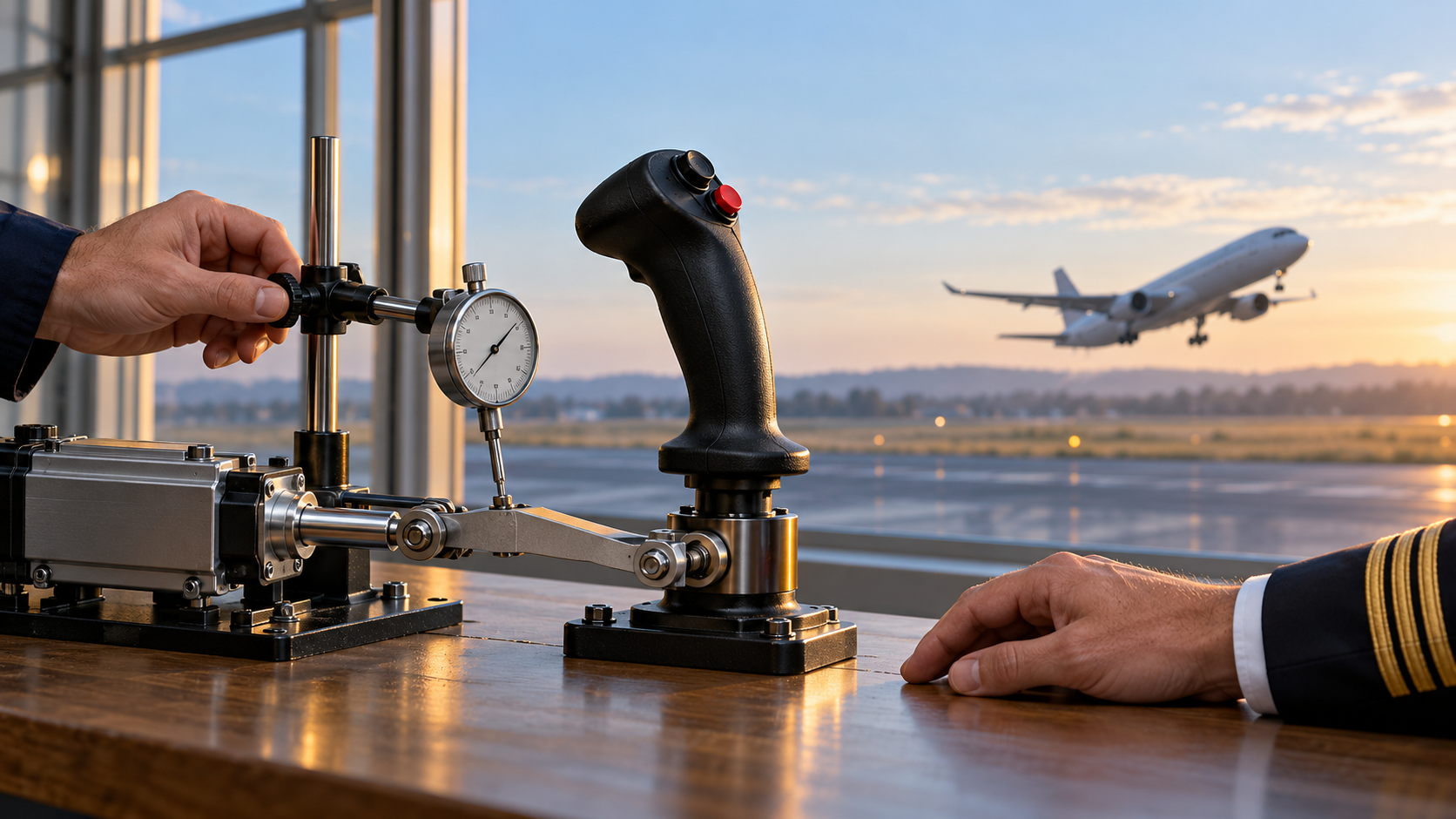
Under the proposal, E2TS engages when the thrust levers reach the takeoff/go-around detent. It controls pitch through rotation and initial climb, along with bank angle, without pilot input to those flight controls. The crew still has work to do. During the ground run, pilots remain responsible for keeping the airplane on the runway centerline through manual directional control. The system augments that work to reduce heading deviations, and any pilot rudder input is added to the system’s rudder output.
That division matters. This is a proposed, model-specific change in how people and automation share a safety-critical task. It is not approval for pilotless takeoff, and the filing does not establish that E2TS is certified or operating in airline service. The FAA says current airworthiness regulations do not contain adequate or appropriate safety standards for this feature, so it has proposed special conditions for the ERJ 190-400 series. Comments are due November 27.
Verification bottleneck
The old takeoff-performance rules make room for differences that can arise in service. One provision defines rotation speed partly around the moment when a pilot begins the action, so human technique is built into the way the standard describes the maneuver.
Once software controls rotation, the proof has to follow different sources of error. The FAA’s proposal translates expected human variation into the maximum expected deviation produced by sensor accuracy and system tolerances. The evaluation must cover the aircraft’s operating envelope, including weight, center of gravity, thrust, altitude, temperature, and wind.
The proposed conditions then turn that translation into measurable limits. With one engine inoperative, takeoff distance after accounting for the maximum expected E2TS rotation-speed deviation could not exceed the corresponding distance in the Airplane Flight Manual. With all engines operating, maximum rotation-speed deviation or an out-of-trim condition could not increase takeoff distance by more than 1% over the corresponding manual figure. Other deviations that affect pitch dynamics would also have to be counted unless their contribution is negligible. E2TS operation would also have to avoid unsafe flight characteristics.
This is the verification bottleneck created by the handoff. Automation may make a maneuver more repeatable, yet the regulator still needs evidence about the system’s worst credible deviations, the conditions under which they occur, and the remaining human responsibilities. A standard built from observed human performance cannot be transferred to software by changing the noun. Its assumptions have to be unpacked and rebuilt as tests.
Opportunities
The FAA proposal offers a useful pattern for any institution moving a regulated task from a person to an automated system. Start by finding the verbs in the old standard: who initiates, checks, decides, intervenes, records, and accepts responsibility. Then identify which of those actions have moved into software and which still belong to a person.
The next step is to replace vague confidence in consistency with a map of machine variability. That means naming the sensors, tolerances, timing errors, environmental conditions, and edge cases that can change the result. It also means testing the boundary between the automated action and the human intervention that remains available. In the E2TS proposal, manual centerline control and summed rudder inputs are part of the safety picture rather than leftovers outside it.
This translation work will become more common as automation reaches systems governed by rules written for human hands, judgment, and response times. Aviation provides unusually visible evidence because certification turns assumptions into numbers. Other sectors may have the same problem hidden in policy manuals, procurement language, audit controls, or laws that never anticipated software as the actor.
The immediate opportunity is modest and practical: audit legacy requirements for assumed human actions before automating them. For each one, document the new source of variation, the surviving human duty, the measurable limit, and the evidence needed to show that the new arrangement stays inside the original safety boundary. Done well, this keeps the rule’s protective purpose intact when the performer changes.
Sources
- FAA proposed special conditions for the Embraer ERJ 190-400 Enhanced Takeoff System, Federal Register, published October 27, 2026
- Official Federal Register PDF, GovInfo