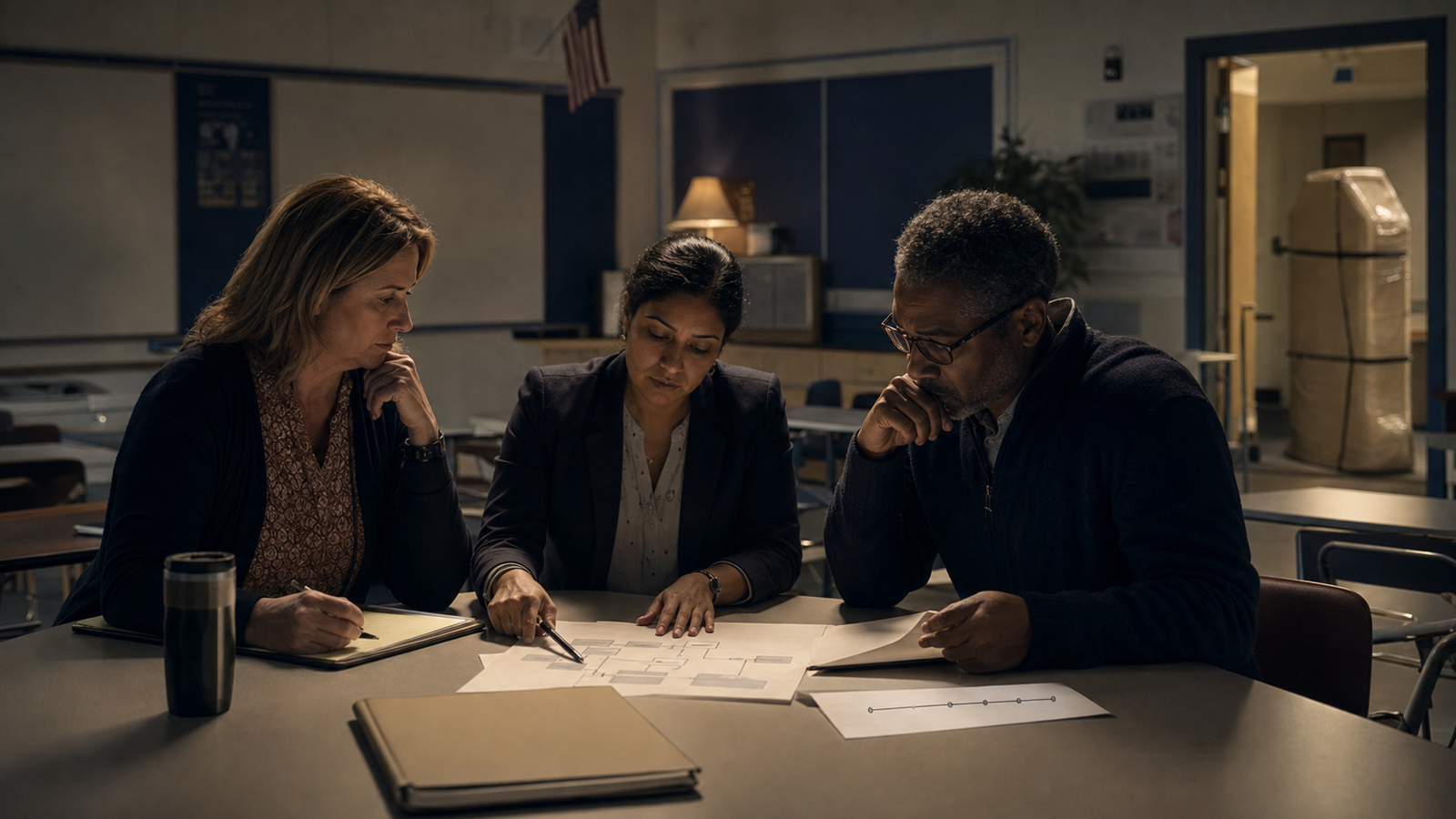
In June, Salamanca City Central School District in western New York approved a $57,590 purchase of a humanoid robot and companion AI assistant for a fall classroom pilot. On July 24, the district put the plan on hold while it works through enhanced student-data privacy agreements with New York’s education agency and talks with the community.
That pause happened before the robot entered a classroom. No public evidence reviewed for this article shows students were recorded, their data left the district, or the system caused harm. The useful signal is the sequence: purchase first, deeper verification second.
New York Focus reported that Education Commissioner Betty Rosa told the district the department remained concerned about the effect a humanoid robot may have in a high-school classroom. Teachers and community members raised questions about privacy, screen exposure, human connection, and cultural fit. Realbotix said it respected the pause and wanted the program to be safe, district-approved, and supported by teachers.
The Robot Is Only the Front Door
The planned system reached beyond a humanlike machine sitting in class. It included an avatar students could access from laptops during and after school. Students would use unique identification codes, and the assistant was expected to draw on prior learning interactions for personalized help. Planned uses included assignment feedback, curriculum support, and translation.
The district and vendor described a closed system without an open internet connection. They said this deployment would exclude facial recognition and recording, and that Realbotix would not receive personally identifiable student information. Those claims matter. They still need an inspectable trail showing how the controls work, who can change them, what gets retained, and what happens when the software updates.
A lifelike body makes the procurement visible. The operational questions sit behind it. What does the avatar remember? Which version produced an answer? Who reviews a flagged interaction? Can a parent see the data record? What triggers a fresh review? How will the district measure educational value rather than novelty or engagement alone?
The Human Premium is clear here. Teachers, parents, students, state reviewers, and community members bring context that a vendor demonstration cannot supply. That does not make classroom AI useless. Federal policy encourages appropriate AI integration, student literacy, educator training, and critical thinking. A school can teach students how to work with AI while demanding stronger evidence from any system placed in a position of trust.
Salamanca’s pause is a governance move, not a verdict on every classroom robot. The next step is to turn the questions into a repeatable evidence packet before another district reaches the same point.
Verification bottleneck
Verification is becoming the scarce institutional function.
- What moved faster: A purchase and planned pilot advanced before the state privacy process and wider community review were complete.
- Who has to verify: District leaders, educators, privacy officers, parents, students, state reviewers, and affected communities need to inspect the data flow, model behavior, supervision plan, educational purpose, and change history.
- What to watch next: Whether Salamanca publishes a reviewable privacy and pilot framework, whether the system changes before any launch, and whether New York develops a reusable standard for child-facing AI deployments.
Opportunities
Where value may appear: independent verification for child-facing AI procurement.
A builder or local consulting team could create a pilot-readiness packet that maps identifiers, storage, access, retention, deletion, model version, human escalation, accessibility, physical safety, and update triggers. A companion service could help districts compare the promised educational benefit with actual classroom measures, then preserve teacher, parent, student, and community feedback without flattening disagreement into one score.
There is also room for a plain-language “system receipt” that travels with the deployment. Parents and educators should be able to see which product version was approved, what changed, who reviewed it, and when the evidence expires.
This is public-interest orientation and builder idea fodder, not legal, educational, child-development, privacy, procurement, financial, or investment advice.
The robot got the attention. The purchasing sequence revealed the deeper job: verify the institution around the machine before the machine becomes part of the institution.
Sources
- New York Focus: Western New York School District Hits Pause on Robot Teacher Amid Scrutiny
- New York Focus: Rural NY School District Will Be One of First to Bring Humanoid Robot Into Classroom
- The Guardian: Teachers decry plan for humanoid robot in New York high school
- New York State United Teachers: Statement on the Salamanca robot plan
- New York State Education Department: Data Privacy and Security
- White House: Executive Order 14277 on AI education for American youth
- Realbotix: Planned Salamanca deployment